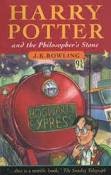
With NaNoWriMo now in full swing, get a leg up with this 15 sentence break down using the Blake Snyder beat sheet. And because I love examples, I've used Harry Potter and the Philosopher's Stone.
1. Opening Image (a normal day in the life of your protagonist)
Ten year old, Harry Potter lives with his spiteful Aunt and Uncle, and abusive cousin. He is repeatedly reminded how lucky he is to have a roof over his head, despite the fact his parents had the audacity to get killed in a car accident when he was an infant.
2. Theme stated (what the story is REALLY about)
Harry frees the snake from the zoo just by talking to it, but this isn't the first time weird things have happened around Harry. Never experiencing any comfort from his adoptive relations when these 'weird things' would happen, Harry often feels unwanted and shunned for being different.
3. Set-up (the bump in the normal life that foreshadows the catalyst)
Harry keeps receiving letters from Hogwarts that his Uncle refuses to let him open.
 |
| Post! photo credit, blueroomblog.com |
4. Catalyst (the inciting incident)
Hagrid arrives and surprises Harry with the true nature of his parent's death at the hands of an evil wizard name Lord Voldemort, and as a young wizard, he's due to start his magical education at Hogwarts.
5. Debate (main character has a struggle with inner question; should tie in with theme)
Harry fears that he will not fit in at Hogwarts, having never been exposed to magic. The huge legacy left by his parent's death is a curse as he tries to live up to everyone's expectations.
6. Break into two (protagonist must make a proactive decision)
During the sorting hat ceremony, Harry chooses to be in Gryffindor as opposed to Slytherin; the first stand he has ever made for himself, and a sign that he can control his own destiny.
 |
| NOT Slytherin! photo credit, article.wn.com |
7. B story (usual a romance or behind the scenes conflict that will rear it's head in the finale)
Harry learns that The Philosophers Stone was stolen from Gringotts the day he and Hagrid were there. After Draco tricks Harry into a midnight duel, he discovers a trap door guarded by a three headed dog.
8. The Promise of the Premise (This is when the main character explores the new world and the audience is entertained; the heart of the book)
Quidditch! Harry is a natural seeker and gets admiration from his classmates. When Hagrid gives him some information by mistake, he matches wits with Ron and Hermione to find out what's hidden under the trapdoor.
9. Midpoint (This is when everything is “great” or “awful”. The stakes are raised higher when another complication is thrown in the path of your protagonist)
Having never been given proper presents from the Dursley's, Harry has the best Christmas ever at Hogwarts, and receives an invisibility cloak, which enables him to sneak around looking for more clues about the trapdoor. Instead, he finds 'the mirror of erised' which shows him with his parents. Harry soon becomes obsessed and forgets about his real friends, choosing to spend all his time looking into the glass.
10. Bad guys close in (Doubt, fear, and enemies, gang up to defeat the main character’s goal; the "great”/“awful” situation disintegrates.)
After eavesdropping on Snape threatening Professor Quirrell, and a nasty leg bite from a particular three headed dog, Harry is convinced that Snape is trying to steal the Philosophers Stone.
11. All is Lost – The moment that the main character realizes they’ve lost everything they gained, or everything they now have has no meaning. Something or someone dies. It can be physical or emotional, but the death of something old makes way for something new to be born.
While serving detention in the forbidden forest, Harry witnesses the murder of a unicorn and is saved by Firenze, one of the centaurs, who foretells that Lord Voldemort will once again rise to power. Harry realizes that the man who murdered his parents will be coming for him next. This is the first time Harry sees the evil that can exist in this new magical world.
 |
| photo credit, album.aufeminin.com |
12. Dark Night of the Soul – The main character hits bottom. Grieving the "death" of their—dream? goal? mentor character? love of their life? etc. But it is in this darkest moment when they have their epiphany...
Fearing that Snape is going to steal the Philosophers Stone to make the elixir of life for Lord Voldemort, Harry goes to Dumbledore only to find he's been called away. Knowing none of the other professors will believe him, Harry feels powerless and must put his own life on the line to try and stop Snape.
13. Break Into Three (Choosing Act Three) – Thanks to a fresh idea, new inspiration, or last-minute advice from the B Story (usually the love interest), the main character chooses to try again.
After Ron is beaten unconscious at chess, and Hermione figures out the complicated wizard riddle, Harry is the only one who can move forward to the last chamber. With only a first year's knowledge of magic, he must face Shape alone. But Hermione reminds him that he IS a wizard, and the only chance they have at stopping Snape.
14. Finale – This time around, the main character incorporates the Theme – the nugget of truth that now makes sense to them – into their fight for the goal because they have experience from the A Story and context from the B Story.
Harry discovers Professor Quirrell is trying to steal the stone for Lord Voldemort, not Snape. Knowing his parents died saving him, Harry feels an overhwelming connection to them and believes in the power of their love. With his previous knowledge, Harry defeats Quirrell (and Lord Voldemort) by using the mirror of erised.
 |
| Uh-oh. Don't look under the turban. photo credit, agataviscomwrodpress.com |
Harry recuperates and realizes the friend's he's made at Hogwarts are like a real family to him, and that he is no longer alone. Hagrid gives him an album of his parents to remind him of where he came from and where he really belongs.
I hope this helps your writing. Now go tackle that novel like a champ!
If you liked this post, click on the Google +1 below!


